Mahjong Master Path to Harmony
Gimica GmbHCasual
3.957.00 Reviews
- Version
- 1.1.1
- Installs
- 100.00K
- Age Rating
- Everyone
Screenshots
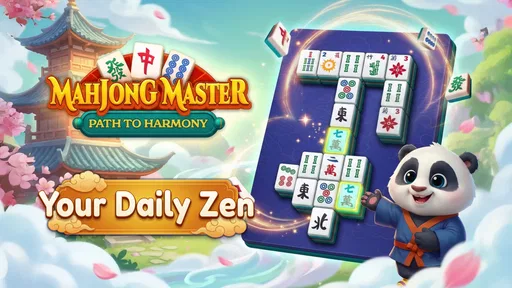
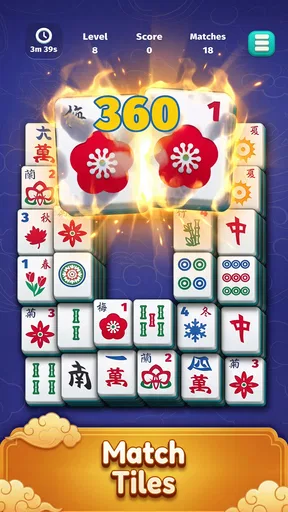
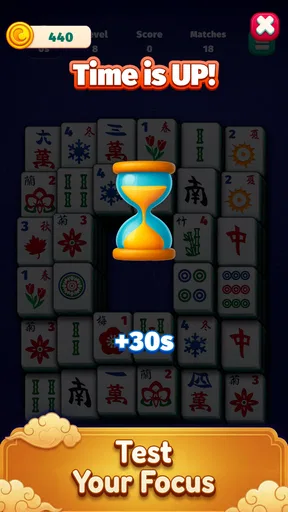
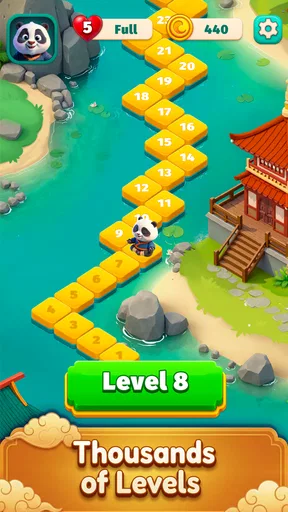
Our Review of Mahjong Master Path to Harmony
 Analysis by Appyee
I approached Mahjong Master Path to Harmony as a small, casual game for the moments when I want something quiet rather than competitive. Its basic promise is easy to understand: a relaxing Mahjong experience from Gimica GmbH, built for short sessions and simple decision-making. After spending time with it, I think its appeal depends less on chasing a deep challenge and more on whether you enjoy the familiar rhythm of matching tiles at your own pace.
That distinction matters. This is not the kind of game I would choose when I want a long story, a demanding strategy system, or a social competition. I would choose it when I have a few minutes before an appointment, want to wind down after work, or need a gentle activity that does not require learning a complicated control scheme. It is free to start, rated for Everyone, and available for devices running Android 7.0 or later, so the entry barrier is fairly low.
How I Decided Whether It Was Worth Keeping
My first test was simple: could I understand what to do without stopping to study instructions? For a casual Mahjong game, that is important. The best versions make the board readable, keep taps responsive, and let the player settle into a comfortable rhythm. I also looked at whether the game works as a brief break, whether it offers enough reason to return, and whether its relaxing tone survives moments when a board becomes less straightforward.
I also considered the kind of Mahjong experience it represents. A traditional Mahjong app may focus on four-player rules, scoring, and competitive matches. A solitaire-style title such as this one is a different proposition: the enjoyment comes from clearing layouts, spotting available pairs, and managing the order in which tiles are removed. Someone comparing the two should not treat them as interchangeable. One is closer to a board-game session with opponents; the other is a personal puzzle.
The current release is version 1.1.1, and the game has passed the early curiosity stage with more than one hundred thousand installs. Its average rating is 3.9, based on a little over three hundred ratings and dozens of written reviews. I read that overall response as reasonably positive but not a guarantee that every player will enjoy the same pace. Casual puzzle games often divide people between those who appreciate repetition and those who need constant novelty.
My practical decision criteria came down to four questions. Do you like tile-matching puzzles? Are you comfortable with a calm, mostly self-directed experience? Do you want a free download with optional spending rather than a paid-only game? And are you willing to stop playing if the available challenge begins to feel familiar? If the answer to the first three is yes, this game deserves a fair trial. If the last answer is no, one of the alternatives in the same broad category may suit you better.
The best use case is a short, low-pressure break
One everyday situation shows where it fits well. I can imagine opening it while waiting for a train, playing a little during a lunch break, and closing it without feeling that I abandoned an important task. The game does not ask me to remember a complicated plot or coordinate with another person. That makes it easier to use in small gaps of time than a larger adventure game.
It also works as a transition between activities. After a busy day, I often do not want another stream of notifications or a game that demands fast reactions. A Mahjong board gives me something concrete to focus on while keeping the mental workload modest. The act of scanning for pairs can be more satisfying than passive scrolling, especially when I set myself a small goal such as clearing a layout carefully instead of tapping impulsively.
Where the calm Mahjong format works best
The strongest part of the experience is the basic loop. I look over the available tiles, identify matching symbols, and decide which pair to remove first. That last step is more important than it may seem. A visible match is not always the most useful match, because removing one tile can expose another or leave a less flexible arrangement. Even without a large strategy system, the board encourages me to pause and look ahead.
That makes the game more engaging than a purely automatic matching exercise. I can play quickly when the layout is obvious, but I can also slow down and treat each board as a small planning problem. My most useful habit was to scan the upper or more exposed parts of a layout before clearing easy pairs. This reduces the chance of removing a convenient match while overlooking a move that would open several tiles.
Another helpful approach is to avoid treating every available pair as equally urgent. When several matches are visible, I first look for the one that appears to uncover the largest area. This is a simple technique, but it gives the session more purpose and helps prevent the board from becoming a sequence of random taps. Players who already enjoy solitaire Mahjong will recognize this style of thinking, while newcomers can learn it naturally through play.
The game’s casual identity is also a strength for accessibility. It is suitable for a broad audience, and the Everyone age rating reinforces that it is positioned as a family-friendly experience. I would feel comfortable suggesting it to someone who wants a puzzle without combat, intense time pressure, or a complicated competitive ladder. That does not mean every person will find it exciting, but it does make the game easy to recommend as a gentle starting point.
Small habits that make the boards more enjoyable
I found three practical habits especially useful. First, I check the whole visible arrangement before making the first move instead of immediately taking the easiest pair. That brief pause can reveal a better opening. Second, I keep track of tiles that are partly blocked, because they are often more valuable targets than pairs already sitting in open positions. Third, when I feel myself tapping without looking, I treat that as a sign to restart my attention rather than blaming the board.
These are not secret modes or advanced systems; they are ways to get more value from the game’s central puzzle. They also reveal the main trade-off. The experience can feel pleasantly meditative when I engage with the layout, but flatter when I play mechanically. The game provides the board; much of the satisfaction comes from how deliberately I approach it.
I would also use it as a screen-time substitute rather than as a primary game. A short session gives me a defined activity with a natural stopping point, which is preferable to opening a feed with no clear end. For that purpose, the uncomplicated format is an advantage. It asks for attention without demanding that I reorganize my evening around it.
What the ratings and free entry suggest
The 3.9 average feels consistent with a game that has a clear audience but may not satisfy players looking for dramatic variety. The rating is neither a warning sign nor a reason to assume universal appeal. I would interpret it as a cue to try the free version personally, paying attention to whether the board design and pacing hold my interest after the first few sessions.
There is no purchase price to get started, which makes experimentation easy. At the same time, in-app purchases range from $2.49 to $46.99 per item. That is a wide spread, so I would decide in advance whether I am happy to play within the free experience. My advice is not to spend simply because a particular board feels slow or because I want to accelerate progress. First establish that the core matching loop is something you genuinely want to repeat.
This is especially important for casual games. A player may enjoy the first session because the format is new, then discover that the long-term value depends on continued interest in similar boards. I would wait until I had formed a stable routine before considering any optional purchase. If I only open the game occasionally, paying for convenience is unlikely to improve my experience very much.
When Another Mahjong Game May Be the Better Choice
The clearest alternative is a traditional Mahjong app that recreates four-player play. That type of game is better for someone who wants opponents, formal scoring, and the feeling of sitting down for a complete match. It can also be preferable to a solitaire format when the player already knows traditional Mahjong rules and wants to practice that specific style. I would not switch between the two expecting the same kind of challenge.
A second alternative is a more competitive puzzle game. If your motivation comes from leaderboards, timed rounds, head-to-head matches, or a constant stream of difficult objectives, this relaxing format may feel too quiet. A competitive title can create stronger short-term excitement, though it may also bring more pressure and less flexibility. I would choose that route when performance matters more to me than decompression.
There is also a case for a richer adventure or narrative game. The name suggests a journey, but my reason to play is the Mahjong puzzle itself, not a story-driven campaign. If you want character development, exploration, or a world that changes substantially from session to session, you should look toward a dedicated adventure game. This title makes more sense when “adventure” means moving through a sequence of relaxing puzzle moments rather than entering a large interactive story.
Finally, a minimalist offline puzzle may be a better fit for someone who wants almost nothing beyond the board. A stripped-down alternative can feel cleaner and more focused, while this game’s broader casual presentation may be more appealing to players who like a sense of progression around their tile-matching sessions. Since different people define “relaxing” differently, I would compare not only the rules but also how much surrounding structure I actually want.
Who should skip it
I would skip this game if I need a serious strategic contest, a multiplayer table, or a substantial narrative. I would also be cautious if I lose interest quickly in repeated matching layouts. The free entry removes much of the risk of trying it, but it does not change the fundamental nature of the experience. No amount of optional spending can turn a calm solitaire puzzle into a traditional Mahjong match or a fast action game.
Players who dislike in-app purchase ranges that can reach $46.99 per item should also keep their boundaries clear. The sensible approach is to treat the free download as the complete test and make any later decision slowly. If the game becomes a relaxing habit without requiring purchases, that is a better sign than feeling pushed to buy immediately.
What switching from another game feels like
Moving from a competitive Mahjong app to this one should be easy in terms of basic tile recognition, but the mindset changes. I no longer measure success against another player; I measure it by how carefully I read the layout. That can feel refreshing after a tense match, although it may seem underpowered if competition was the main reason I played Mahjong in the first place.
Moving from a simple matching game may require a little more patience. The best move is not always the first obvious pair, so I get more from the session when I scan before tapping. In return, the board feels less like a reflex exercise and more like a compact planning task. The cost of switching is therefore not learning complicated rules; it is adjusting expectations about pace and depth.
For someone coming from a large adventure game, the biggest adjustment is the absence of a need to follow a long-term story. That is either a benefit or a drawback. I enjoy it when I want a clean mental break, but I would not install it as a replacement for a game that I play mainly for exploration or emotional investment.
My recommendation after using it
I recommend Mahjong Master Path to Harmony for casual players who like solitaire-style tile puzzles and want a calm game that can fit around ordinary life. Its free starting point, Everyone rating, and support for Android 7.0 and later make it approachable, while the central matching loop rewards a little thought instead of demanding quick reflexes. I especially see it working for short breaks, quiet evenings, and players who prefer personal progress over competition.
I recommend trying it without planning to spend money at first. Give the free experience enough time to answer the important question: do you still enjoy examining the boards after the novelty has faded? Use the pause-and-scan habit, prioritize moves that open blocked tiles, and notice whether the relaxed pace helps you unwind or simply feels repetitive.
My final view is positive but specific. This is a good choice when I want a friendly Mahjong puzzle, not when I want the full traditional game or an ambitious adventure. Gimica GmbH has positioned it in a comfortable casual space, and that focus is its main reason to play. If that is the kind of small, low-pressure game you have been looking for, Mahjong Master Path to Harmony is worth downloading and judging on its own gentle rhythm.
Verdict
Strengths of Mahjong Master Path to Harmony
- Relaxing tile-matching gameplay suitable for short sessions.
- Gradual difficulty helps newcomers learn classic Mahjong mechanics.
- Path-based progression gives each level a clear sense of purpose.
- Offline play makes it convenient for travel or limited connectivity.
- Simple controls work well on both phones and tablets.
Limitations of Mahjong Master Path to Harmony
- Some stages may feel repetitive after extended play sessions.
- Small tile details can be harder to distinguish on compact screens.
- Progression may feel slow for players seeking faster challenges.
- Limited social features reduce interaction with other Mahjong fans.
- Hints or boosters may lessen the challenge for experienced players.
Other Releases by Gimica GmbH
View All


Similar Picks in This Category
View All
My Talking Angela
Outfit7 Limited4.2

My Talking Tom
Outfit7 Limited4.3

Pou
Zakeh4.2

My Talking Tom 2: Pet Game
Outfit7 Limited4.3

Candy Crush Saga
King4.6

Bridge Race
Supersonic Studios LTD4.1
Frequently Asked Questions
What is Mahjong Master: Path to Harmony?
Mahjong Master: Path to Harmony is a relaxing tile-matching puzzle game built around traditional Mahjong solitaire gameplay. You clear the board by matching identical, available tiles, while progressing through themed stages and tranquil environments. The game is designed for both short sessions and longer play, making it suitable for players who enjoy casual puzzles, visual challenges, and a peaceful atmosphere rather than fast-paced action.
How do you play Mahjong Master: Path to Harmony?
The main objective is to remove every tile from the board by selecting two matching tiles that are free to play. A tile usually needs to have no tile covering it and at least one open side. As layouts become more complex, you must plan several moves ahead, avoid blocking useful pairs, and use available hints or shuffle options carefully. Each completed board rewards observation, patience, and strategic thinking.
Is Mahjong Master: Path to Harmony suitable for beginners?
Yes, the game is generally approachable for beginners because its core rules are simple to understand, even for players who have never played Mahjong solitaire before. Early levels provide a gentle introduction to matching and tile accessibility, while later puzzles add more demanding layouts. Hints can also help when you are unsure which pair to select, although relying on them too often may reduce the strategic challenge.
Does Mahjong Master: Path to Harmony require an internet connection?
Many Mahjong solitaire games can be played offline after installation, which makes them convenient for travel, commuting, or relaxing without mobile data. However, features such as advertisements, cloud synchronization, events, leaderboards, updates, or in-app purchases may require an internet connection. Before downloading, check the current store description and test the game in offline mode, since requirements can change between versions and devices.
Is Mahjong Master: Path to Harmony free to download, and does it include ads or purchases?
The game may be available as a free download, but free access commonly comes with advertising, optional in-app purchases, or both. Purchases can potentially provide extra hints, remove advertisements, unlock content, or offer other convenience features, depending on the version. We recommend reviewing the Google Play or App Store listing before installing, especially if the device is used by children or has purchase restrictions.
Play our best games!


